A free split sheet template.
A split sheet says who wrote a song and how much of it each writer owns. Each writer signs it.
The template is free to download and use for any song.
What the sheet lists
A performing rights organization (PRO) or a publisher uses these details to register the song.
- The song’s title, and any working title it went by
- The date and place of the writing session
- Each writer’s full legal name, and their writing name if it differs
- Each writer’s PRO (ASCAP, BMI, SESAC, PRS, SOCAN, APRA) and IPI/CAE number
- Each writer’s publisher, if any, with its PRO and IPI
- Each writer’s share as a percentage, for lyrics, music or both
- A signature and date for each writer
- A total line, which must come to 100%
Keep the sheet as a record of what you agreed. For legal advice, ask a lawyer. Your PRO will tell you what it needs.
| Writer | PRO / IPI | Wrote | Share |
|---|---|---|---|
| [Writer’s legal name] | [PRO] · [IPI] | Lyrics, music | 50% |
| [Writer’s legal name] | [PRO] · [IPI] | Lyrics, music | 50% |
| Total | 100% | ||
Sign on the day
Fill in the sheet while everyone is still in the room. Six months on, people remember differently who brought the chorus.
One sheet per song
Make a separate sheet for each song. When a writer joins a song later, start a new sheet and have everyone sign it again.
Download the template
The one-page template has the fields above and room for four writers. Fill in the PDF by hand, or type into the Word file on screen.
No email required.
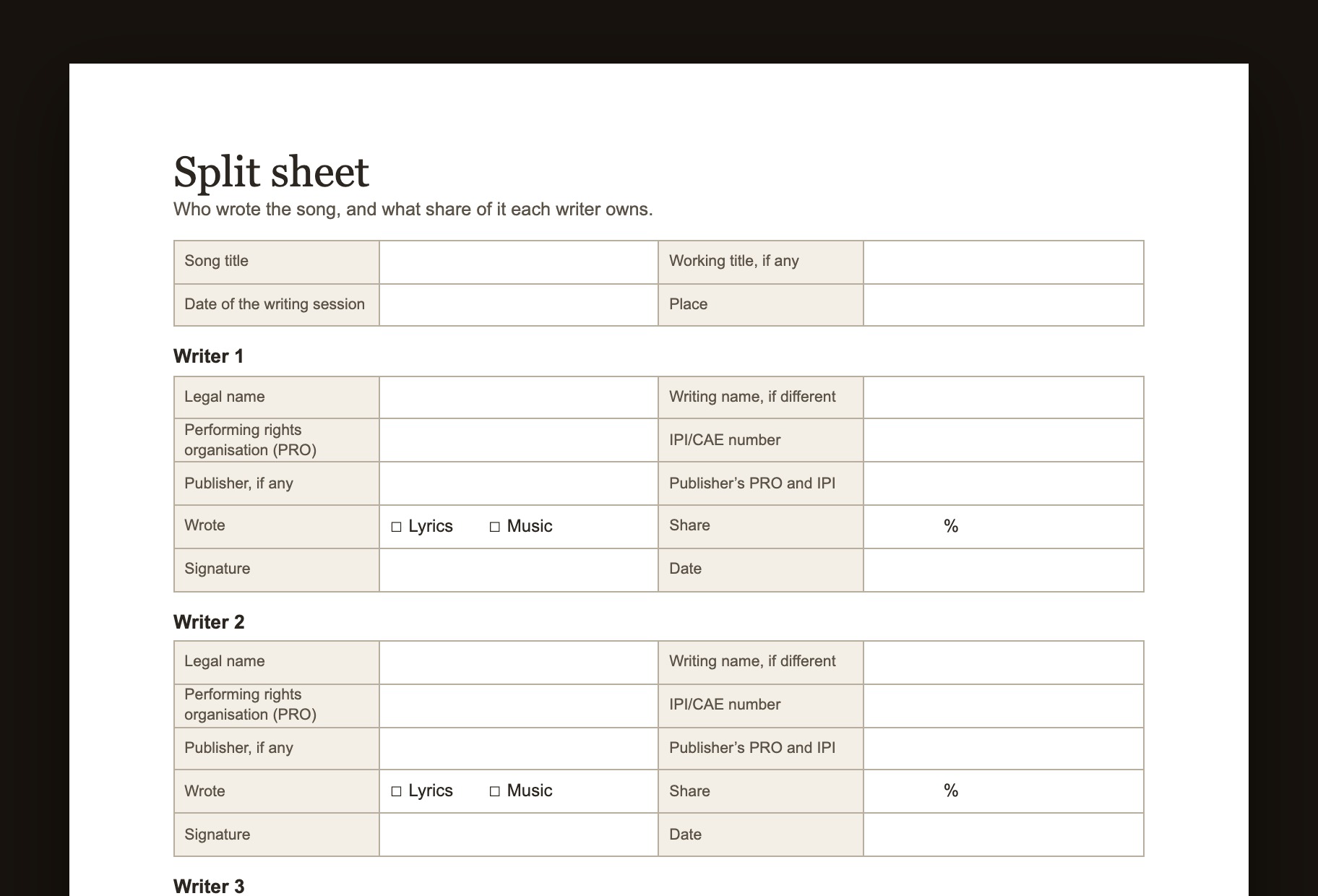
The template’s first page: the song, then a block for each writer.
Built-in split sheets
In Sonetta Studio, each song keeps its co-writers’ names and whether they wrote the words or the music. Once each writer has a share and the shares make 100%, it prints the split sheet with a line for each of them to sign and date. Pro
Questions about split sheets
What is a split sheet?
A one-page agreement between the writers of a song. The sheet says who wrote the song and what percentage each writer owns, and each of them signs it. Each writer then uses it to register the song with their performing rights organization (PRO).
What should a split sheet include?
The song’s title, with the date and place you wrote it. For each writer, their legal name, PRO, IPI/CAE number and any publisher. Then each writer’s share as a percentage, with a signature and date. The shares must add up to 100%, and a writer with no PRO yet leaves that field blank.
Do I need a split sheet if I write alone?
No. A split sheet records an agreement between writers, and a song you wrote alone has nothing to split. Register it with your PRO as 100% yours. If someone adds a part later and you agree they own some of it, make a sheet then.
What is an IPI number?
The number a PRO gives each writer and publisher it represents. IPI stands for Interested Party Information, and older forms call it a CAE number. Royalties reach the right person with it, even when two writers share a name. You get one when you join a PRO.
What is a PRO?
A performing rights organization, such as ASCAP or BMI in the US, PRS in the UK or SOCAN in Canada. A PRO collects royalties when your songs are broadcast or performed in public, and pays them to the writers registered for each song. Writers usually join the one in their own country.
Is the template free?
Yes. Download the PDF or the Word file from this page and use it for as many songs as you like. You won’t be asked for an email address.
Does Sonetta Studio make split sheets?
On Pro, yes. It builds one from the song’s credits, with a row for each writer and a line for each to sign and date. Each row shows what the writer wrote, their share, their performing rights organization and their IPI number. The app’s sheet has no fields for the session’s date and place or for publishers, so use the template when you need those.
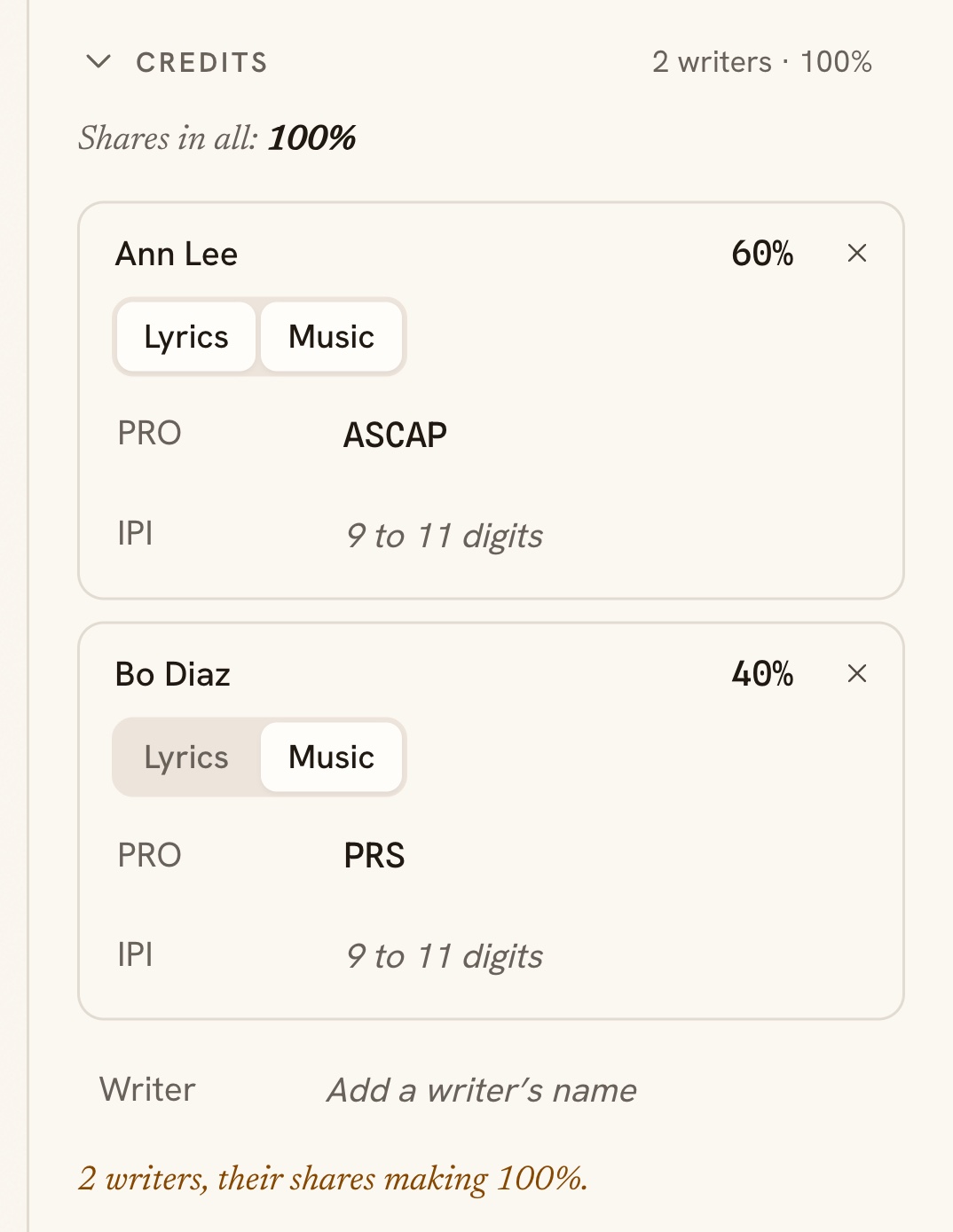
A song’s credits: two writers, what each wrote, their shares, PRO and IPI, kept with the song.
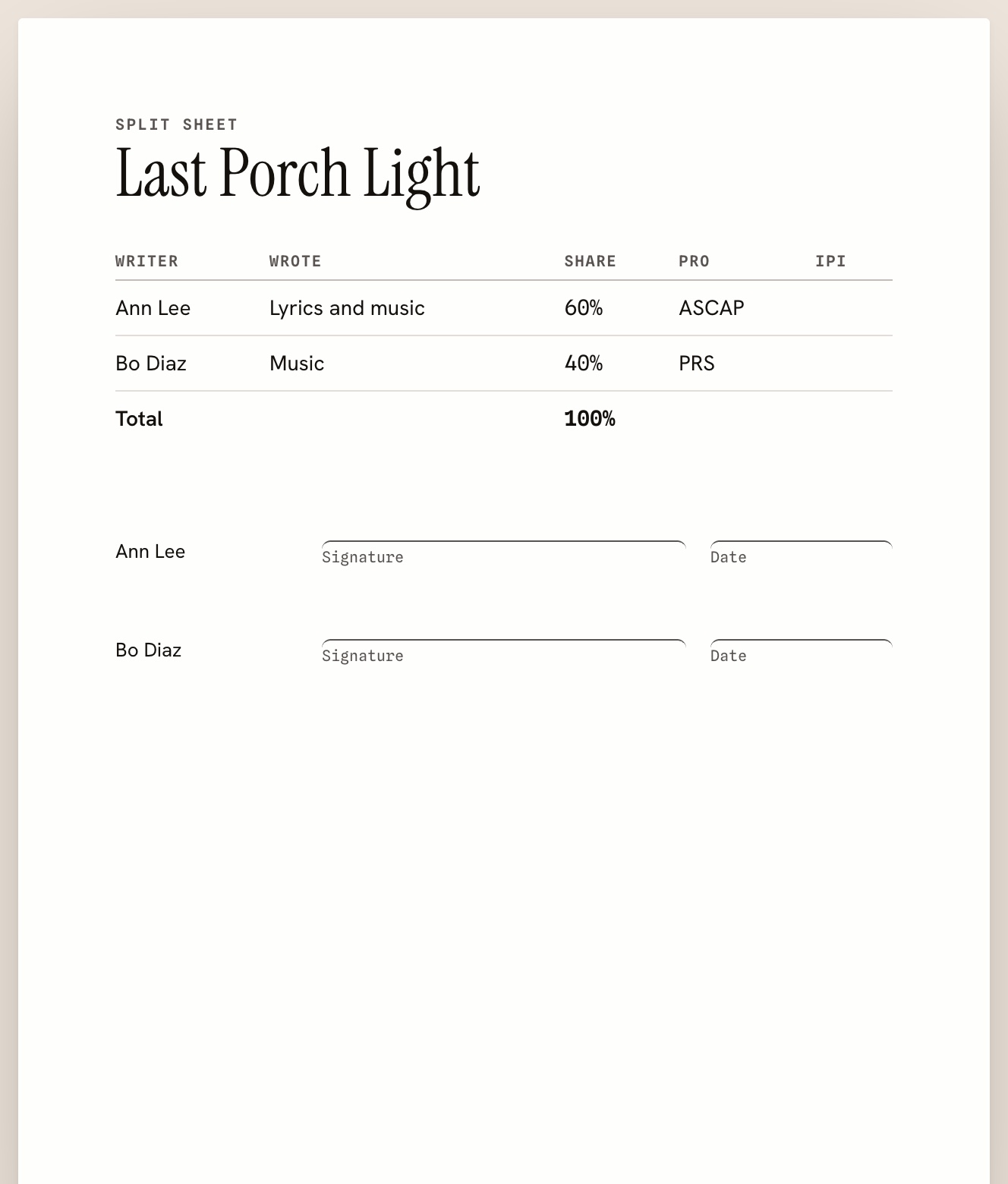
The split sheet, built from the song’s credits, with a line for each writer to sign.